
Dave Bettis is an internationally certified arborist, a retired Missouri Department of Transportation employee, a livestock farmer, a father of four, grandfather of 12 and great-grandfather of three.
Oh, yeah. He and his wife, Deb Landacre, have another important skill they’d like to share.
“We’ve jumped through a lot of hoops,” 74-year-old Dave said with a sigh.
The Barry, Illinois resident was diagnosed 17 years ago with Myasthenia gravis, an autoimmune disease that weakens the body’s voluntary muscles. Dave’s ability to “jump through hoops” – even with weakened muscles - has kept him alive. Those hoops led him to Mayo Clinic in Minnesota and the University of Iowa, and to providers in St. Louis and Columbia, Missouri, in Springfield, Illinois, and finally back to his Pike County home.
What is Myasthenia gravis?
The disease is caused by an immune system malfunction that causes a disruption in the normal communication between nerve cells and the cells of the body’s voluntary muscles, which results in muscle weakness.
Voluntary muscles are those that a person controls including arms, legs and neck. Myasthenia gravis can lead to non-life-threatening conditions like drooping eyelids and difficulty walking, to potentially fatal complications including inability to swallow and breathe. Dave has experienced many of the symptoms and complications in the course of his search for help to manage his condition, for which there is no cure.
According to Yale Medicine, Myasthenia gravis is considered rare, with estimates suggesting 70,000-100,000 Americans are diagnosed with the disease. It most commonly affects women between the ages of 20 and 40 and men between ages 50 and 80.
Dave and Deb’s journey
When diagnosed in 2008, Dave was pretty much on his own to figure things out. Knowing that there is no cure for the disease, he began a mission to find the best treatment and medical help for himself.
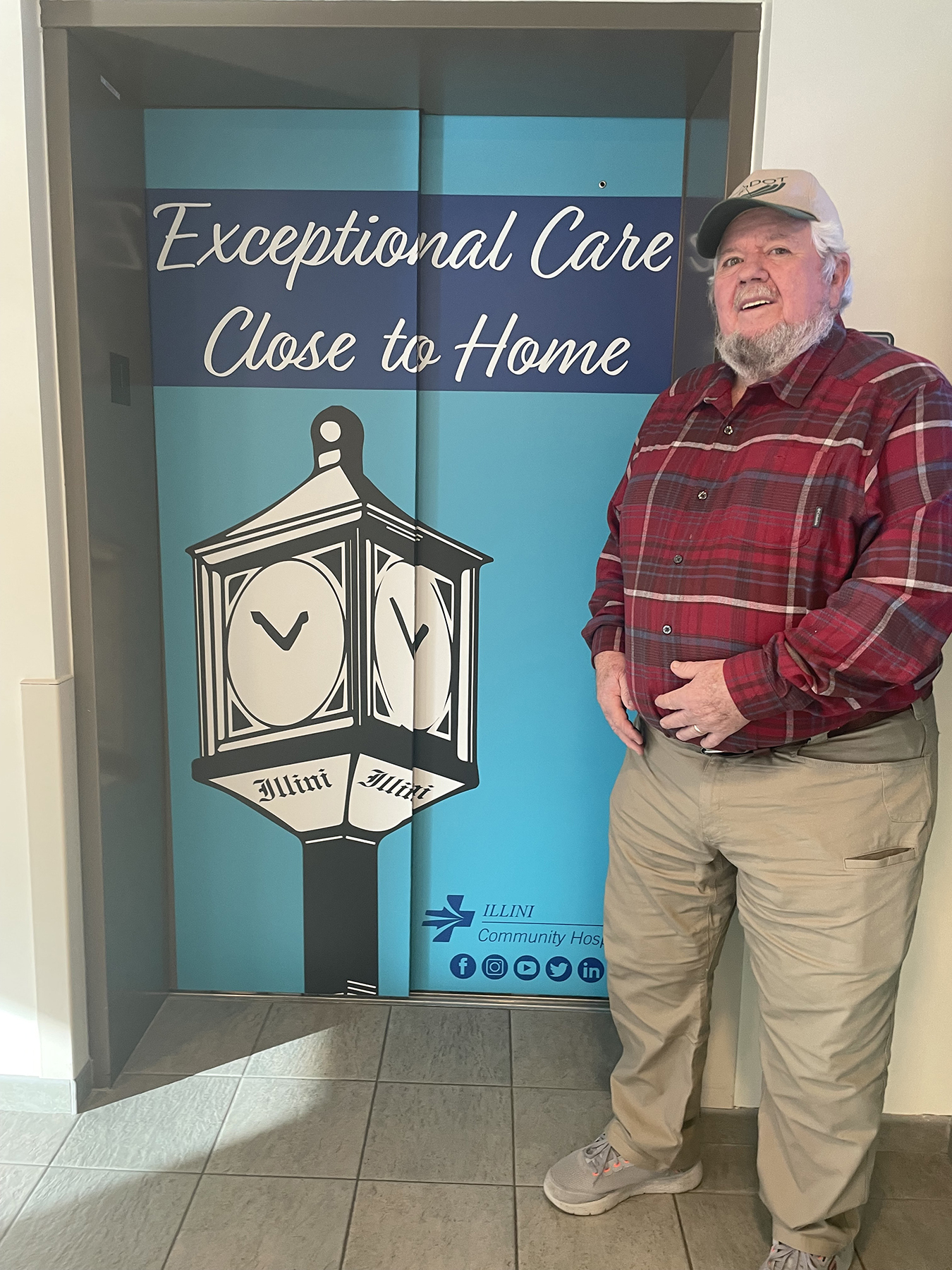
“I wasn’t going to let it defeat me,” he said. “I delved into this thing. I researched. I read everything I could. It’s been quite a voyage for me.”
Medications Dave took in the early days in the quest to control his symptoms damaged his liver and kidneys, and a flare-up of his Myasthenia gravis almost killed him in 2012.
“I could not breathe or swallow,” he vividly recalls about that day. “I was going down bad. I thought I was a goner that day.”
Dave survived that flare-up and about 12 years later found a new drug, Rystiggo, that offered hope to better control his symptoms.
The only place Dave and his doctor could find offering infusions of the newly-approved drug was an expensive, private infusion center in St. Louis. Rystiggo requires infusions once-a-week for six-weeks, then three weeks off before starting the infusion cycle again. Because he had yet to find an effective medication to control his symptoms at the time, Dave was ill and weak.
“St. Louis was very difficult. It was a seven-hour day for us to receive a 15-minute treatment. It took everything out of us,” he said.
Shortly after Dave became a patient of the St. Louis infusion center with the hope of better managing his symptoms, it suddenly and permanently closed, leaving him no place to receive the infusion of the drug he hoped would keep his muscles strong and moving.
Dave’s Springfield-based doctor and a representative from the drug company that makes Rystiggo began to search for a new treatment location in the region.
“They checked with every hospital,” Deb stated. “It really was a struggle.”
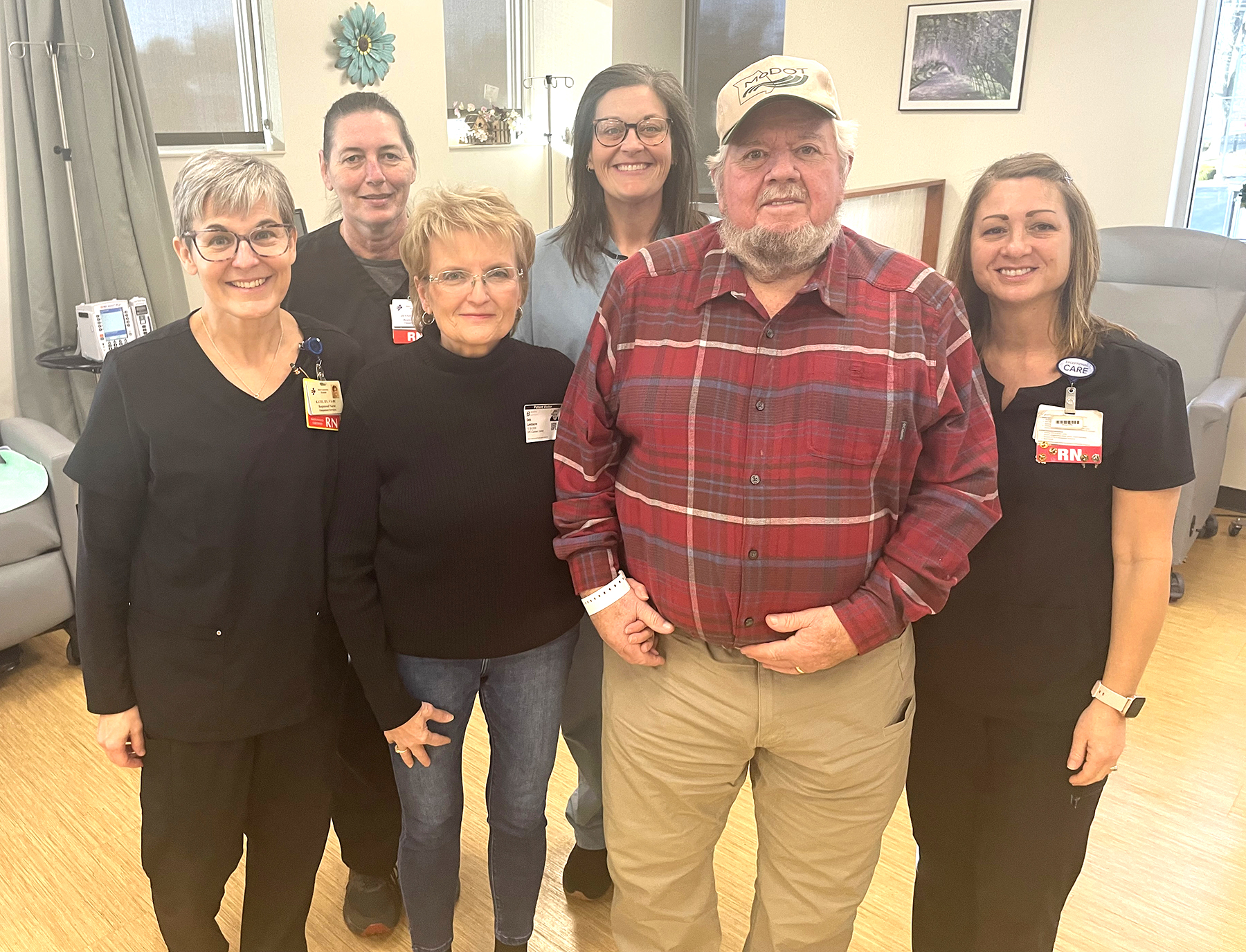
Help and hope found in their own “backyard”
Ashley Cawthon, BSN, RN, nurse manager, Outpatient Services, Illini Community Hospital, leads the hospital infusion center team. She received a call from the Rystiggo drug company representative in late 2024.
It did not take Illini Community Hospital leadership long to decide they would provide Dave the treatment he needed.
“We had the infusion technology. All we needed was the tubing required to infuse this drug,” Ashley said. “Minimal effort was needed to deliver a large, impactful outcome that offered hope to Dave to be able to live his life and feel like he could truly do what he wanted to do with nothing standing in his way.”
Dave and Deb appreciate the can-do attitude and skill of the Illini Community Hospital team.
“The staff is a lot more accommodating and pleasant than in St. Louis,” Dave declared. “I think we are getting better care and the location is ideal for us. We’re happy. Life is good.”
“We’re grateful to be here,” Deb added.
“Dave and Deb’s experience highlights the profound impact of expanding access to specialized care in rural communities,” Ashley concluded. “I think that is one of the most important things in healthcare, meeting the patient where they are. Bringing care closer to home doesn’t just improve convenience, it preserves independence, supports working patients and families, and meaningfully improves quality of life.”
For more on the care available at Illini Community Hospital, go to visit https://www.blessinghealth.org/locations/illini-community-hospital/illini-community-hospital.